Friday, May 31, 2013

Didn't We Almost Have It All?

I like to split my life into semesters because it's the easiest way I know how to turn my life into a television show. Each semester is representative of a season, and the breaks between class used to give me a break between each season, similar to the summer hiatus more television programs take. My life hardly fits into the semesterly format anymore, and in a year's time, semesters will cease to exist entirely. I have no idea how you split normal, everyday time into television seasons, but I'm sure once I'm faced with the issue, I'll find a way around it.
But in my television show, I alter the way I see things--no matter how boring or frustrating my life may get, I find a way to make it more entertaining or more dramatic in my mind. I make the frustrations mean something, even if they don't actually mean anything at all in reality. Some people would call that neurosis, but I tend to think it's just my way of constantly writing. I tend to make my life something I would rather see than what may actually be in front of me and because of that, I find no boredom in my life--every day is worth living to the fullest. The only problem with my method is when the lines between reality and my reality get blurred. And it happens to the best of us... the blurriness that is. It may not be a TV show in your mind, but we all have the things that we come to believe are true and they don't happen to particularly align with reality.
---
One of my favorite, most recent scenes that I play in my head happens every morning on the way to work. I recently found the song Underneath Your Beautiful, and I start it once I get off the escalator at the Metro Center subway stop.
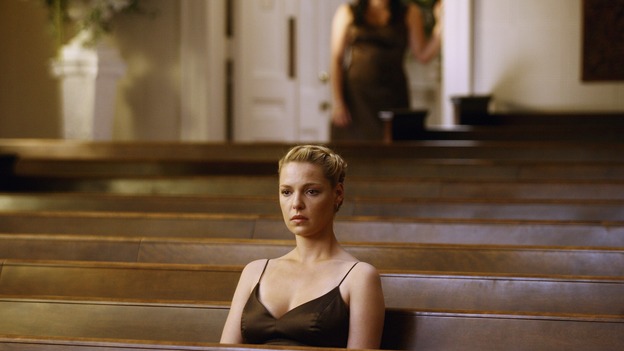
If Shonda Rhimes has taught us anything about modern day television, it's that every powerful scene is best if accompanied by an equally powerful song. But as I transfer from Metro Center to Chinatown, the song grows in intensity, and once I get off the train and exit the turn stall and approach the summit of the final escalator, the song crescendos then grows silent. Sometimes I stop and watch the characters, slightly positioned cater-corner from the metro. There's the guy, and he says to the girl, I don't want to be your choice because you're not my choice. A choice means you have options--that there's a selection to choose from. A choice means that someone else matters enough to be considered. You're the only thing that matters to me. You were never just an option. And then he pauses, and they look into each other's eyes. I don't want to be your choice. And then I realize that I'm blocking the metro exit, and I wish that I knew how to screen write because that's good stuff. But I don't know how, and I'm now running forty-five seconds behind, so I walk on to work.
---
And that's when the perception is over. I may be the guy who has come up with multiple seasons of a fictional television dramedy, but I do understand when it's time to come back to the real world, and at times, it's a refreshing feeling. The image of the fake couple at the metro is perfect and eloquent and sweet, but it's just an image--at least for now. And when you can realize that it's just an image, it's almost as rewarding to be able to come back to reality and respect that story and that scene and those characters for what they were in the moment. It's similar to falling in love, or rather, falling out of it.
A little over a year ago, I was in love with being in love. I've come to believe it's a college senior year phenomenon as life is about to make a giant change, and if you can find something to place you in the moment, it may take your mind out of the future for a while. And it did, because for a while, I loved everything I was doing. I loved having someone to make out with, and I loved having someone to talk to. We had a song and inside jokes and mornings where we'd wake up in the same twin-sized college bed, and it really was amazing. And then it wasn't.
I've never been good at lying about important things, and once the new wore off, it became increasingly evident that the fairy tale I had produced in my mind was not what the reality seemed to be. But in too many cases, we waste time because we would rather believe that what we have is what we've come to perceive it as. So in the months before graduation, I tried to make it as fantastic as I wanted it to be. I knew what I wanted it to be, and more than that, I knew that I was the only one that wanted it that way. I was reaching for something that simply wasn't, and in a way, that's more painful than the whole thing being over. But then after too many walks and long conversations and disagreements about what the future might look like, I ended up sitting outside on a windy April unsure of exactly what I wanted to do. The conversation just wasn't happening--like, literally--it wasn't happening. So we sat there in silence for a while, and finally I said, I don't think we need to do this anymore. And there were tears, but for once, they weren't from me. I closed my eyes and leaned in for a final kiss because that's how all the best romances end, but when I opened them, I didn't really recognize the person that was sitting in front of me. And that was when I realized that I had fallen out of love. Or maybe more accurately, I had fallen out of love with trying to be in love. Like the image I see some mornings outside the metro, the love I had so strongly believed in had suddenly vanished once I realized how truly not there it was. It didn't mean that I didn't love the idea of it or love what I once believed was there. It was just the moment when you come to realize that a mirage is simply not tangible.
One of our greatest flaws as humans is the notion that we've ever understood what we need. In terms of the basics, I suppose we've gotten that down: the food, the water, the shelter bit. All of that seems pretty obvious. But where it gets complicated is when we try to figure out what will make us complete--you know, after the basics. It honestly doesn't take a lot to keep a human alive, but the struggle comes when we try and figure out what makes a human feel alive. And that's where we step in with our notions and presuppositions. It's just our normal reaction, even sometimes going so far as to try and make those decisions for others: an issue I had a year ago, and one that I've essentially imposed on a ton of fictitious characters. We try and make life what we think it should be with little regard to the idea that maybe life works itself out without our imposing hand.
But the learning process is difficult, so I stick with primarily forcing life decision on to the people who live in my head instead of the people who live... well... with me. I think, at least for me, part of it has to do with being impatient and the other part has to do with having control over something. Television is planned out beautifully, almost to the point that it's predictable. You have the season opener, then November sweeps, then February sweeps, and then the finale. You may not know exactly what's going to happen, but you have a pretty good feeling when it will happen. You have character development, and on the up and up, everyone can fall in love and experience the depths of life (with the aforementioned musical background). And as for my life? There's hardly anything scripted about it--it's about as close to reality TV as you can get. And when it doesn't follow script, all you can do is wait for the next scene and look back and say, Maybe it was never supposed to go that way at all.

Thursday, May 30, 2013

Why You Mad?

I grew up in a very loving home, but to be fair, you could insert any emotion into the sentence "I grew up in a very ________ home," and it would probably be applicable. I come from a people of strong reactions, and I've learned the hard way that the rest of the world just doesn't quite function the same way that my family does. Last week, as Kellie Pickler won the mirrorball trophy on the 16th season of Dancing with the Stars, I sat on the couch counting the number of times I had touched each pillow (5) as they announced the results. Partially obsessive-compulsive charged, partially emotionally charged, I needed to do whatever I could to see Kellie win. And I'm not sure that my persistent touching had anything to do with her victory, but when they announced it, I let out a throaty yell from the couch lifting myself from the cushions. My roommate Ben recorded it, and it hit me, I must be like an animal to these people. All the tears and yells and laughter... they don't even know what it means.
And that's always been the problem--getting people to understand. It's not so much that you need someone to talk to after the fact as much as you need someone to just kind of get what's going on when it's happening. When I come in with a 6 pack of beer, My Best Friend's Wedding, and a pint of ice cream, I want someone to be able to look at me and say: hm, the movie means he's sad about relationships, the ice cream means he doesn't think it's going to get any better, and the 6 pack is because he doesn't care. That's a complicated puzzle, and it's hard to expect anyone to ever get it--not without a solid 5-10 years of experience with you--but when you find those people, it's more important than you know that you hold on to them--especially when the uglier emotions come out.
And that leads me back to sophomore year of college--a year that has provided me with some of the most absurd stories I've ever written. If you wanted to shine as a student in campus affairs, you were a resident assistant. Because our class was super competitive, we had a list our freshman year of who we thought would get hired--naturally, I was a shoo in. Before my first year, if you were an RA, you were pretty much set in a position to be an RA until you graduated. However, when it came time to be placed in your next building, we were shocked: we all had to reapply. I dove into my presentation and application to distract myself from what had been on my mind for months--the fruitless crush that I had based the latter half of my sophomore year on. I could control this application. I could control the accompanying presentation--or so I thought.
When we signed up for interview times, I went for the earliest spot that I could find: third. I didn't realize who had signed up before me though. Being an overachiever, I got there early and what did I see? The love interest... and the other man. About a month before the interview, I knew that I was out of the weak link of the love triangle, so I had avoided the situation entirely. That was the only way I knew how to deal with it--avoid it. But there they were sitting and enjoying spots 1 and 2, and there I was... number 3, which seemed oddly appropriate. The other man was spot 1, so we were sitting together waiting on the first interview to wrap up. Once it was over, the other man came and sat next to me, and I said, "Isn't your interview over? Why are you still hanging around?" He responded, "Oh, I just thought I'd wait until this one is over... you know, for support." And then he smiled. Instantly, I felt my stomach start to fall, almost so fast that it could have broken the chair I was sitting in. To anyone else, it would have been annoying, but to me... it was devastating. It was exactly what I needed to break me before I went in for my interview, and it worked like a charm.
I stepped into my interview with my literary themed presentation with fun little titles like "I Know Why the Caged RA Sings," and other things like that, but my performance was lost. I walked into the room in a daze--the year before, the whole interview felt like a conversation, even when I was getting hit with really hard questions. This interview though was more like a train wreck happening at seven miles an hour. I went through each slide and unconsciously read directly off every one. All of my moves were awkward, and when I asked for questions at the end, the panel sat in front of me with the most confused faces without a single word to say. I walked out of the room devastated--for more reasons than one.
I knew exactly what I needed to do, or more so, exactly who I needed to go to. I got in my car and drove directly home--to the people who taught me to react the very way I've come to call normal. I drove thirty minutes home and hopped out of my car, slamming the door behind me. I walked inside and saw my dad. I need a gun. Without saying anything else he said, Which one? I responded, The .45. My dad walked to the gun cabinet and got it out with two clips, and turned around and asked, Animal or human target? I just stared at him for a moment with my pissed off expression, and he said, Human target it is. And then we walked outside, I put on the earphones and shot 10 rounds into the target, unloaded the clip, reloaded the next one, and fired 10 more shots. I took the earphones off, and he asked, Alright, are you ready to talk about what happened? And then we went in and I explained everything: the crush, the other man, the interview... all of it.
For clarification, I don't shoot other people when I get angry. This isn't Bad Boys or anything. And when I was shooting the target, it's not like I was imagining anybody's face on it. But there's something special about being able to walk into your house and ask for a gun and not have anyone asking what you're going to do with it. It's a side effect of someone knowing you well enough that they just get it. So my response happens to be shooting inanimate objects, touching things obsessive-compulsively, and celebrating a little bit more outwardly than the next guy. For other people, it may consist of being completely reserved to pretty much every emotion across the board. Doesn't matter how you handle it really as long as there's someone around that understands how you react and why you do it.

Friday, May 10, 2013

Super Dollar Magic Kingdom: A Folklore

Today, I went to the doctor because I found a lump when I was taking a shower. I found the lump on Sunday, so for four days, I feared for the worst. Through my own examination and web research, the signs all pointed to cancer--and not in the way that you say, "I have a headache," then go to WebMD and self-diagnose that you have a brain tumor. (Don't act like you don't know what I'm talking about. We're all freaks.) This was one of those situations where it really seemed like it could be cancer. I decided to limit the people I talked to about it--I didn't want the sympathy. I was mad. I was scared and I was mad and I was hurt and most of all, I didn't want to die. I didn't want to fight it either--I just didn't want it to be.
Today, I met Alex Trebek, and if I heard it once, I heard it a thousand times--This. Is. Jeopardy. And I could barely enjoy it because I was sitting there, engrossed in potential-cancer land (not to be confused with the much more lively children's game Candy Land), and all I could think was, "Yeah, that's right motherf----r. This is Jeopardy. You don't even know." And all I wanted was someone to accompany me to the doctor--someone to tell me that I was being overreactive, someone to tell me that it was okay if they told me it was cancer, or someone to joke with once we found out it wasn't. But that's not what happened. I sat in Dr. Nguyen's office thumbing through a People Magazine, probably wrinkled from the humidity in the room. The office was sticky and lonely and lingering with all the frustration and worries from everyone before it. I couldn't control my hands, and I dropped my keys when I gave my insurance card to the receptionist because I was so nervous. And all I wanted was to be back--back at Super Dollar Magic Kingdom.

***

Freshman year of college is weird. Weird and hard. You're trying to figure out all these things about what it means to actually be in college, and there's always a wrench that gets thrown in there. For the most part, it was easy. Just the basics of being a college freshman, but as the end of the Spring semester approached, the wrench happened. Things weren't right at home, and because of that, I didn't go back that often. I removed myself from the situation because the energy wasn't the same: it didn't feel like the place full of love that I left. My parents were arguing more, and it was weird because my parents always loved each other. They still do to this day. But at that point, it didn't feel like it, and soon after the arguing started, they would call me. The conversations were always ambiguous, but it always led to the same conclusion: things weren't going so hot for my parents.
So one night, I grabbed my friend Kasi, and we went to Pearsons: the dining hall/run-down dorm that no one lives in anymore. There were couches in the lobby, and we went there because we knew no one else would be there at midnight in March. I immediately bought myself a Coke because... Coke cures most ailments, and I lost it. I cried and I yelled and I cried some more, but it was interrupted--we heard the sound of a malfunctioning machine, and as we looked over, we saw a dollar bill floating gently to the floor. Jesus once cured with leprosy, Moses parted the Red Sea--and on a cool March evening, a Coca Cola machine gave me back my dollar. 
And like all good things, it completely went to our heads. Kasi and I looked at each other in amazement. Could it be? Could one of the main sources of non-human dollar thievery actually be giving us our money back? It was the vigilante of Coke machines, and we didn't care--we took advantage of its kindness. We figured out that the machine would spit the dollar back out every ten minutes, and it wasn't long until our friends became suspicious of why we would come back to our dorm with six cokes in hand. 
We made an agreement: we would tell two other people, one apiece, about our treasure trove. We would invite them into our ranks, and they too would experience the beauty that was what we had titled "Super Dollar Magic Kingdom." So, I told my friend Ellison, and she told Bridget. Soon after we decided that to clear up roommate issues, they had to tell their roommates, so then it was the six of us--we would take turns with the machine, inserting the same dollar in every ten minutes, and over the course of a month, we cleared out the Coke machine twice. But after a while, it became more than a Coke machine. We talked about our business there: the stuff that didn't matter and the stuff that did. And at the end of the night, we would sneak back into Copeland Hall with backpacks full of drinks just because we could. And when people would ask us where we got all the Diet Cokes from, well, we'd just lie.
The fateful day finally happened that we returned to Super Dollar Magic Kingdom, and the machine had been replaced. Apparently, after about 110 beverages missing, the Coca Cola company finally got the picture and decided to start charging again. And with that, the saga of Super Dollar Magic Kingdom came to a close. In college, we all grew apart and together and apart and together, but when we reached our senior year, we were celebrating the final 100 days until graduation with the rest of our class, and we all ended up back at the same table. Sadly, there were no free cokes, but there was free champagne, and that's pretty much all you can ask for in life. I don't know if they remembered it, or most of the stuff we had been through, but when I looked around at that table, I saw the people that had gotten me through college--all at the expense of the Coca-Cola company.

***

I was a mess waiting for the doctor to arrive. He asked me the basics: allergies, family history, smoking and drinking habits. I didn't understand why we couldn't get straight to the real issue. But when he finally mentioned the lump, I felt dizzy. I had been swallowing all this for nearly a week, begging someone to give me an answer that only a doctor really could. He inspected it, and then quickly responded, "Justin, that's not cancer. You're fine." And then, naturally, as an entitled grad student I tried to explain how many things it had in common with cancer, and then he explained how many things the lump didn't. He said, sometimes, things just grow--we don't know why, but it's a cyst. And it will probably go away.
Then it was over. All the worry and panic and stuff was just simply over like that, but it was the four days waiting that was harder than the actual visit. I wanted to be back in Pearsons on the nasty couches. Not because I want my college life back or because I can't let go. It had nothing to do with that. It has to do with the five other people I was sitting with. We need people, and we need that support. We get through and manage life when we lean on each other--and the fact that anything can be solved over a Coke, regardless of all that carcinogenic aspartame. 

Wednesday, May 1, 2013

Our Favorite Sins

My friend Anna and I were in her bed watching Grey's Anatomy one night during my junior year. Callie's mother told her that she would not be attending her wedding to Arizona because she couldn't stand the thought of her daughter marrying a woman--she couldn't stand the thought of her daughter, who she loved, spending the rest of her life in Hell. I immediately became disgusted, while Anna literally cheered the mother on. Immediately, I turned around and looked at Anna as if she had slapped me across the face. Anna is one of my best friends, but there she sat, cheering on a fictional mother as she told her fictional daughter that she would be spending her eternity in Hell for... marrying a woman. Anna and I immediately got into discourse with Anna's greatest defense being the morality of the Christian religion, her upbringing, the book of Leviticus, and the very limited references made in the New Testament (let it be noted, none were said by Jesus). I, in response, quoted a theme that occurs repeatedly over the course of both the Old and New Testaments: judgement. We'll discuss the aftermath of that conversation later.
This week, Jason Collins of the Wizards, formerly the Celtics, made the very bold announcement that he is gay--the first athlete of America's four biggest professional sports. I wasn't going to put much commentary in the conversation because I had already tried to state my position last year during the whole Chick-Fil-A debacle (oh, you didn't read What a Waste of Waffle Fries?!). I actually defended the idea of purchasing food from Chick-Fil-A. But what inspires me to address this Jason Collins issue is the comparisons that have been drawn throughout this week. I hear about how Tim Tebow has been persecuted for being a Christian and how terribly he has been bashed as a Christian player, while Collins is being revered for being an openly gay athlete--and that's where my issue comes up. Tebow, a Christian, has been bashed? As a child, I used to try and make the case about what it was like to be white or to be a boy or to even be a Christian. There's a lot of prejudice in the world, and I'm not saying that there's not prejudice against white people or men or Christians, because there is. There truly is. But in my twenty-three years of life, I can say that I've never been told that being any of those things was wrong, and I was surely never told that I would go to Hell for them. My eternal damnation was never on the line because of my race or gender or religion. And I dare say, this is not the Crusades anymore. Christians are not blamed for blowing up buildings; Christians were not gassed or burned in small confined spaces. If the Christian religion's biggest current hurdle is being criticized on MSNBC, then I think we're doing okay.
Posted the morning after the Collins
announcement
And I say we because I, myself, am a Christian. I find my religion to be immensely personal and not the topic of frequent conversation. My prayers are mine and God's, my beliefs are only applicable to me because I don't think it's my place to determine the rights and wrongs of others. I struggle enough doing right on my own. But I find it hard to explain to agnostics, atheists, non-believers what our message is and who we want to be when in the midst of our own "persecution," we use announcements like Collins as a "general reminder" that homosexuality is a damning sin. 
I don't write this to defend the followers of my religion or to convince others whether homosexuality is a sin or not. And I definitely don't write this because I'm a lover of sports. I'm an atypical cookie cutter man--I find very little interest in sports. I recently joined a volleyball league in DC, and it's practically a miracle that I did that because sports were the source of my unhappiness for the longest time. When I tried the whole sports thing in elementary school, that was the first time someone called me a girl. Toward the end of elementary school, when I wasn't coordinated enough, that was the first time I was called gay. When I moved to middle school, that changed to faggot. I wanted nothing to do with sports because when you weren't good enough, that's the kind of thing you became: a joke, a mockery, what others observed as a second rate human--and then after getting called that long enough in the sports setting, it began to stick. I was called those things outside of the game, and then it was my eternity that was in question. I went from not being good at sports to being eternally damned.
So when I saw the story of Jason Collins this week, I nearly cried reading it. He spoke of why he kept his sexuality a secret for so very long. He talked about how no one had done this in a major sport before him. He brought up the way that gay people have been viewed in the sports community, and then just for a paragraph or so, he talked about his faith. He spoke about his religious roots and how he still holds on to those things he learned, and he spoke about judgement. But when I think about Collins' proclamation to the world, I don't see it as some giant thing for the professional sports world--though it is. I don't expect a string of players to come forth and announce their homosexuality. I do, however, anticipate that this is the beginning of a new normal--where it's no longer okay to call someone a faggot on the playground because he doesn't know how to properly throw a football. Because calling someone  gay should not be an insult. And for the gay kid that does know how to throw a football (please teach me--I can't throw a spiral to save my life), I imagine that this is the beginning of a time when we'll evaluate his skills and not his personal life.
So, back to Anna. I left Anna's room that night out of frustration. We didn't go back to discuss the conversation because there was no way I could convince her and no way she could convince me. We didn't even mention the topic for months. And then one night, she sat with me on the porch of our dorm and she began to cry. She told me that everything she had ever known had been turned upside down. She explained to me the gay people that she had met and how great of people they are. She told me, If you ever told me you were gay, I just couldn't believe that alone would send you to Hell forever. I just can't believe that, and it doesn't make sense to me anymore. I don't look at that conversation as a victory--like I had beaten her or something. I did, however, look at it as a victory because her world had been challenged and for once, the idea that one sin could damn someone to Hell forever became incomprehensible to her.
And that's what I urge the world to do--to quit putting weight on your favorite sin, or any sin for that matter. Worry about yourself and quit trying to interpret what God views as okay or not okay in other people. Do not use the triumph of humanity as a crutch for an unrelated agenda. We did not tell the world this week whether or not it's moral to be gay--that's honestly not a question that anyone should be discussing in a public forum. But with it being such a point of contention, ask yourself if you are moral--in every sense of the word. Ask yourself if you've sinned, and then cite James 2:10. I do not see homosexuality as a sin, but I do see the persecution of others in the vanity of your own beliefs to be. We moved forward this week--we're one step closer to eradicating the terrible stigma that comes with "being different." And I don't think Jesus could be happier about it--his words in The Bible are meant to push our humanity forward. It's surely not meant to be used as a roadblock to keep us further separated.

Thursday, April 25, 2013

Are You There, Judy? It's Me, Justin

In most of my undergrad classes, I always prided myself on being the most prepared, or at least the one with the best ability to come up with things off the top of my head. In most of my classes, I made A's, so within my department, professors had come to expect a lot out of me. So, it really makes no sense why out of all of the classes that I decided to take within the English major that it was Children's Literature that I apparently decided to throw the towel, or the novel, in on. The class was unlike most in my major because most of my classes revolved around having to fight for a chance to speak--English majors, regardless of what may happen to use after graduation--like to believe that we are of the elite. We speak in metaphors and approach everything from a feminist of Freudian perspective. The author never means what he or she says, and there's always something more that needs to be evaluated. The job of a real English major is to challenge everything that is being said until the last minute of class, usually with a sexual connotation.
This class was different though; we shared the room with Child Development majors, people who would one day wade the depths of vomit (from kids like me), tears, and feces to teach the small children of the world what they need to progress into the future. But when you put us in class, things start to become messy. On the first day, we wanted to take Charlotte's Web and dissect it for its literary value and characterization and plot progression, while the other group wanted to use it as a segue to discuss the anatomy of a spider. We looked around at each other with disgusted looks, eye questioning each other with some pompous, philosophical question like, But what does the spider mean? It was at that point that I decided that I wasn't going to be able to take the class seriously, and I began to spiral through three major phases: the elitist, the absurdist, and the ignorant.
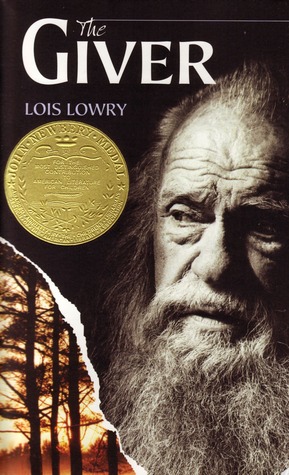
After Charlotte's Web, we jumped into The Giver, a book I read for the first time in fifth grade. Looking back, even though I was in the Talented and Gifted program, I wasn't talented or gifted enough to understand that book, nor the heavy themes that are within it... actually, I'm still probably not talented or gifted enough for it. But as we began discussion, our professor asked what we thought about the end when one Child Development major said, (spoiler alert), Well, I think he and his brother got on a sled and then they rode down to that house with the lights on and they adopted them and then they celebrated Christmas! And being the optimist that I am, I responded, Well, I'm pretty sure they died. Those lights were the end of their lives. They couldn't live in the world they were in, but they were capable of living in any other world either. You could hear a pin drop. The entire room fell silent.
The girl rebuked, Well, at least they went to Heaven. And being the Christian I am, I responded, No, they didn't. There was no Heaven. There was no afterlife. There was no God. They just died. And that's it. At this point, the professor was even looking at me as if I was some kind of ridiculously cold-hearted human. No one really had anything to say, but then through broken words, she asked one final question: Are you an Atheist? I didn't respond because I felt like maybe I had gone a little too far--I had turned a young adult novel into some kind of institution that puts all Christianity into question, even though I didn't do any of it seriously. I would expect if you checked any of those now-teacher's syllabi, The Giver probably did not make the cut.
I was upset with myself for what I had done--some kind of faux-Atheist persona had come out, beaten the Christian majority of myself to death, and released a very cynical view of what that red sled may or may not have meant. I ruined a book for people, and as a half-lit major, that was a giant no-no. I had to win them back because unlike the other English majors, I didn't look down at these people with disgust or contempt. I just looked at them as people that I could mess around with. So, I spent a good chunk of time figuring out what I could do to get them back on my side, and the day that our professor announced a special guest, I knew exactly how I could do it. As we were leaving class, I pulled some of the Child Development majors aside as they were wondering who the special guest is, and I said:

It's Judy Blume.

Lie.

I actually know her. I met her a while back.

Bigger lie.

My mom actually did some work for her at one point, so she's coming in to our class as a favor.

Biggest lie.

I couldn't stop myself because with every word I said, they got more and more excited. This was the woman who taught us that it's okay to have your period and talk to God about it. She was perfect--I, however, was not. I actually got the idea from Chelsea Handler, who once told her classmates that she knew Goldie Hawn and had worked with her at one point. But the difference is, Chelsea Handler was like... seven at the time. I was 19. I had no way of getting out of this, but I also had no way of producing Judy Blume. So, I pretty quickly came to terms with the fact that Judy Blume was definitely not going to show up, and I just hoped that everyone would forget.
But they didn't. They didn't forget at all. In fact, our class size doubled from the time I told the... not truth... to the time that Judy was supposed to show. Once I saw the class size, I took my professor aside and said, So, I may or may not have told the class that the special guest was Judy Blume. I also may or may not have told me that I knew Judy Blume, personally. The look she gave me will be one that remains engrained in my mind forever. She simply looked back at me and said, Do you actually know Judy Blume? I quickly responded, No. She looked like she was 50% confused, 40% disgusted, and 10% impressed, and she said, I'll handle it. She went in front of the class and announced,  I know you guys were expecting Judy Blume today, but she was unable to make it. She wanted to me to send her apologies, and maybe in the future, she could stop by. Why my professor came to my rescue, I'll never know, but now there was a class full of people who had been disappointed in Judy, and that wasn't right.
Correspondence between Ms. Blume and myself.
I didn't mean to do that Judy... I didn't mean to do that to anyone. So, naturally, I emailed her and came clean. I apologized for what I had done, without her having any knowledge of it, and explained that maybe it was the influence of Superfudge or Are You There God, It's Me Margaret? that championed such a lie into reality. I needed to confess though because it's a staple of us Christians, especially us Southern Christians, to be up front and tell people the bad things that we did in some desperate attempt to become clean again. To my surprise, Judy emailed me back. She's a sprite woman to be her age and apparently still very involved in the literary world, if you were curious. And in the end, she phrased the email in a way that I could pretty much take it into class and back up mine and Professor Coning's story about her absence. In short, Judy is a hoss, and I think that she saw that my absolute, boldface lie was told with good intentions. I won the other side of the class back, and for insurance, I used my final presentation to show how you can use literature to teach about diversity within the classroom.
But in the end, the lessons I learned in Children's Lit are probably lessons that I could have learned in elementary school if I hadn't been talking so much. Don't disrespect people because it might make them upset and call you and Atheist. Don't tell people lies, especially about celebrities or about events that are obviously not going to happen. But most of all, when you tell those lies, telling the truth to the right people might actually help perpetuate your lie in a different direction so that you don't get blamed for it nearly as much as you thought you would when you told it. Judy Blume, thank you for never giving up on teaching me things. Superfudge still is, and always will be, a treasure on my book shelf.

Tuesday, April 23, 2013

Digital, Digital Get Down

My friend Alex and I were talking over a nice dose of Fro Yo the other day and reflecting on our youth. Of course, when you're coming of age, you're bound to make mistakes. Bobby, of The Brady Bunch, learned the hard way why he shouldn't play ball in the house. Frankie Muniz found out why you shouldn't kick your dog during a baseball game in My Dog Skip. And I'm not saying that my generation had it any harder than the next, but if you weren't careful, coming of age could be really, really dangerous for someone our age. As we were thinking back to what it was like growing up in the late 90s and early 2000s, I think we might have weirded ourselves out just by looking at the prospects. It was after that conversation that I decided that my children would not have access to the internet until they are least sixteen years old. Why did we not listen to NSYNC when they warned us about these "digital get downs?" Nothing safe happens online.
I had no business on the internet as a child, and if you think back, you probably didn't either. I remember when we got our first computer back in fifth grade--yes, it had CompuServe dial-up internet which allowed you to make a sandwich, walk the dog, and finish a Melville novel between page loading times, but it was the internet, and that was pretty friggin' cool back in 2000. My brother and I would take turns getting on it, and it's not like we could do too much damage because it was stationed in our parents' room. We lived in a very old single wide at the time, so even if my parents were on the other end of the house, if we had something naughty up that made noise, they could hear it without a problem. We never wanted to abuse having a computer... hell, we were just jazzed that we could play Minesweeper any time we wanted to, though neither of us having any idea to this day what that game is about, nor how to play it.
But it wasn't long until we messed everything up. We had grown tired of 50states.com, which apparently is no longer a website (sigh), so we decided to look up facts about Washington D.C. before I took my trip there with safety patrol. Casey and I gathered around the computer to look up whitehouse.com, and there it was for the world to see... naked. women. We were equal parts embarrassed, intrigued, and filled-with-sin. This friend we had known for such a short amount of time had become our enemy so quickly, and from there, it was clear that the internet was going to be the kind of friend that you just don't tell your parents about.
But the inadvertent porn via what we thought was a government website was not the problem. Alex and I decided that the problem really started once we got into middle school. Looking back, we were all over the internet in ways that we, nor our parents, really had any idea about. I remember back to my AIM days when I would sit on the computer changing my background and my layout and coming up with my screenname, and it all seemed so harmless... but then I think about all the chatrooms that I would go into and all of the "friends" that I would make on there. And when I talk to people my age about it, it really was not an uncommon thing for people to make friends and exchange screennames with people that we had no idea who they actually were. I had one friend who was 13 and lived in Ohio named Brittany, and we would ask each other all kinds of personal questions, and 12 year old me was on the other side of the computer screen throughly convinced that I had found my soulmate over the internet. In reality, there's a solid chance that I was not talking to Brittany, or possibly even a child. How we were not all captured by a man named Carl who had an affinity for Mogen David wine and My Little Pony, I will never know.
Honestly, if I were speaking with a predator, I'd probably
also ask for some M&Ms.
All of the conversations would start out the same: ASL? Just think about it for a minute--why in the hell did a 13 year old need to be telling another 13 year old his or her age/sex/location? Hi, my name is Justin, I'm 13/Boy/Knoxville, TN. Here's my address... now come grab me so that I can end up being another story told by John Walsh. We giggle at Chris Hansen because he's always doing the intercept between the pedophile and the decoy on To Catch a Predator, but I have no idea why I'm laughing and judging the idea that these kids' parents weren't paying enough attention because my parents totally let me do the same thing. And the one time that I did connect with a stranger online (on MySpace, may it rest in the shadow of Facebook), I suppose that I was lucky enough that the person I was meeting was an actual fifteen year old girl and not some strange predator because when I asked my mom to drop me off at the movies to meet her, my mom just agreed to it, like that's a normal thing. All I had to protect me was an absurdly loud voice, a twenty dollar bill, and a Nokia phone that was missing the * key and was really only useful to play Snake. I was one of the lucky few whose online ventures led to his first kiss, then friend, then girlfriend, then back to friend, now life coach... but everyone else doesn't always end up so lucky.
The problem with the internet being available to our generation is that we like to hope for the good in people, which is probably why it takes so long for us to learn lessons. Here I am, typing up a brief history of the dangers of the internet with my online dating profile open in the separate tab thinking to myself Hm. I wonder why I haven't met anyone of substance or sanity on here? Well, it's because the internet is where crazies go to hibernate. And then it's the ding of a Facebook chat, or the pong of a new message that wakes them up, and then we all go into full blown creeper mode. And it's something we learned from an early age... well, at least those of us who survived. But that's the scary thing, the chat rooms and the AIM and the time we spent searching the internet for the next weird thing to get ourselves into was just the beginning. Now we use it to keep tabs on our exes and people we don't like and to look up pictures and videos of cats doing human things. (Oh, you haven't seen Kittens Inspired by Kittens? Do it now.) I don't think that the weird dial-up noise that used to come on as the internet loaded was a lack of technology... I think it was more of a warning sign that none of us never listened to, and after some reflection, it's my very own mistakes that will keep future Kirkland children from accessing the internet until at least after puberty. Maybe longer.

Wednesday, April 17, 2013

God and the Stars

For Mom and Max and anyone who has ever been confused

I don't pretend to understand the world or how it works anymore because there's not a lot about it that makes any sense--I suppose that's something you learn as you get older. Every day is kind of a mystery, and it can get the best of you. Yesterday, someone in the world decided to set bombs off in the middle of a marathon... just athletes running for the sake of being alive, for the sake of being a human who can. And then out of no where, someone decided to change the course of too many lives to count, and we're left wondering what happened. There's still no one to blame, and even when there is, what are we supposed to say? There's nothing to say because life, again, failed to make any kind of sense.
The night I left to move up to DC, the car was almost completely packed; I hadn't shed a tear up until that point because I was more excited than I was scared. I was about to start this journey away from everything I had ever known, but then my mom told me to look up into the sky. I stared up and the night was as clear as it had been in weeks--every star possibly visible was shining brightly against the amphitheater of trees that surround our house. When I looked back down, she was staring at me with tears in her eyes, and she told me, When you look up at those stars, just know that those are the same stars I'm looking at, too. Look at them every night and know that I'm right there with you. And then I cried.
It's really no surprise because I've cried my entire life. I like to believe that it's become less and less frequent the older I get, but it's a recurring theme of mine that's haunted me since that first time I threw up in kindergarten. And a lot of times I've cried, I do it because I haven't understood what was going on in the world--things that other people come to accept pretty easily. It took me years to understand the concept that if my mom left me at school, she would eventually come back. Why that was such a hard concept for me to grasp, I really have no idea. It's like I believed that Kimberlin Heights led to Hell or Mexico or some other place that you don't come back from. But then, without fail, after one hour of throwing up and crying, two hours of learning, three hours of me showing people my puppy wallet that had a picture of my family in it, and an hour of recess, my mom would come back and get me, and we'd do the whole thing over again the next day. But when my mamaw died when I was six, I specifically remember crying once. I cried because, even at six, I understood that I wouldn't see her alive again, and after that, I didn't cry about it again.
The concept of death made sense to me because our bodies have a timeline, a specified amount of time that we are allowed to live, and then like all other things (puppy wallet included, though I miss it so), the wear and tear becomes too much. My papaw died seven years later, and I'm not even sure if I shed a tear. It was never the expected things that were difficult for me to handle, and at times, I had trouble relating to other people who cried when those things happened. We weren't meant to live forever--but we were meant to live for a while.
Things like Boston, or 9/11, or Newtown happens and the whole structure of things gets screwed up. The world's plan gets all screwed up, and we don't understand the whole of it. And though those events are devastating and stupefying, it happens every day. People are killed in car accidents or get cancer or drown or die in some other way that was never expected, and it doesn't make any sense why it happened, or specifically, who it happened to. And then I meet people, and occasionally they tell me that they are thinking about suicide. They've thought about ending their own life, prematurely, and it breaks my heart because I know they didn't decide that on their own. I know. My heart pours out for those people because it's another mystery of life--it's a catch 22 of sorts. And I know because I've been in that position where the only thing that breaks your heart more than the idea of being dead is the idea of having to stay alive--it's not a choice to feel that way. It is however a choice to choose life. But it doesn't change the fact that there is a God, or whatever force you choose to believe in, out there that allows these things to happen. When we're not being shaken by a freak of nature, we're attacking one another, and when we're not attacking one another, we attack ourselves.
So it makes sense when people give up on God or hope or life because, honestly, there's a lot of reasons to. But then with all the pain and hurt we experience, I have a friend who has been consistently updating Facebook with the status of her infant son, and when we're talking infant, we're talking baby. He had a lemon sized tumor at the base of his brain, and his chance of living was pretty much slim to none... but every day I'd get on Facebook, Jessica would be asking for prayers for Max and maintaining that God was watching over them. Max, against the odds, has steadily been getting better and better, and there's a very real chance that he could go on and live a normal life. And it's the first time in a while that I thought to myself, Maybe, in a way, God doesn't have so much to do with all the pain we experience in the world. No, I don't get it, but it's God or hope or whatever you believe in that makes life okay when everything else doesn't seem to be making sense. Yeah, there's the things in life that confuse us, but if we take the time we use trying to find someone to blame and use it toward finding someone to lean on or believe in, then it makes the healing time that much more bearable.
And then I return to the stars. I stare at them, and I know that scientifically the only thing that holds them up is nothing--the lack of gravity, and I've been told that the stars we're staring at have already burned out. But still, I use the thing that everyone says is already gone or non-existent as a way of finding my way back home. In that non-existant thing, I find love and comfort and peace, and whose to say that star that I'm staring at tonight is one that is already depleted. We see the stars in the same way that we sometimes look at the world: hopeless and all but gone, but when I look at them, I see something that isn't supposed to be. Something that defies the odd. Something that shakes me to my core and helps me believe in something bigger than me. And sometimes when I see them, I still cry.